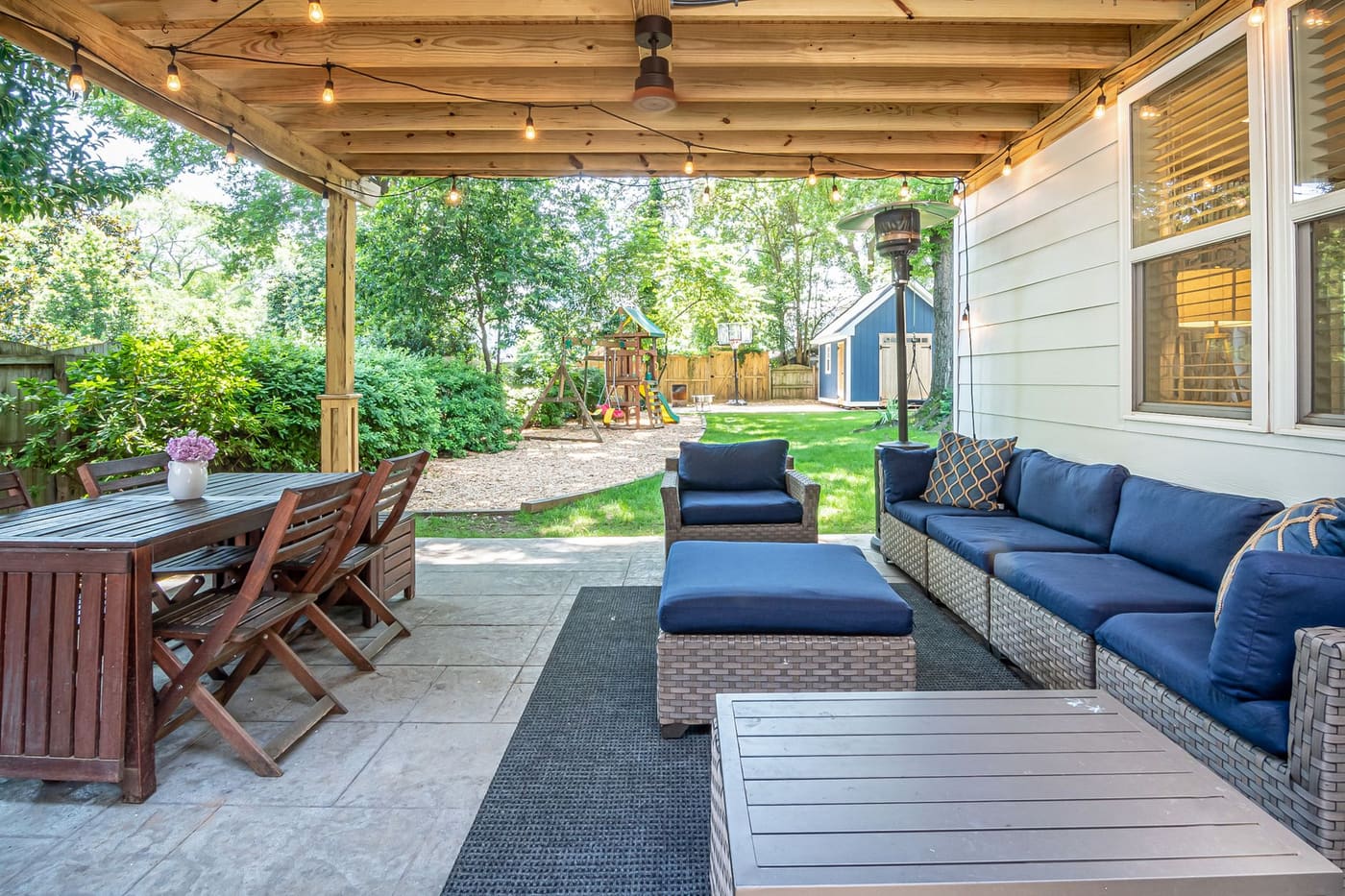
The outdoor upgrades that add the most comfort without a full redesign are shade, a proper place to sit, a level and clean surface under your feet, evening lighting, and some privacy. Each one fixes a specific friction point, like heat, glare, awkward furniture, or feeling watched, and you can usually do them one at a time for a few hundred dollars each.
A full landscape redesign is expensive and slow. Most outdoor spaces do not need one. They need two or three problems solved well. The sections below rank upgrades by comfort gained per dollar and effort, and they flag the points where you should bring in a licensed professional.
Start with friction, not wishful features
Stand in the spot you want to use and notice what bothers you within ten minutes. Hot sun, a wobbly chair, bugs, glare from a neighbor’s window, a dark path, and wet grass underfoot are the usual list. Rank them by how often they keep you from going outside. The top item is where your first dollar goes.
It helps to set a budget in tiers. A weekend tier covers cushions, an umbrella, string lights, a rug, and potted plants. A mid tier covers a shade sail, a gravel or small paver patio, solar or low-voltage lighting, and a privacy screen. A larger tier, such as a pergola or deck, deserves proper planning, and prices for all of these vary by region and product, and you may want to read how to plan a yard so it works better before committing.
Shade comes first in hot climates
In most regions, sun is the biggest reason people stop using a patio between noon and 5 p.m. Choose shade based on how permanent you want it.
- Umbrella. A market or cantilever umbrella is the fastest fix. Use a heavy base rated for the canopy size, and close it when wind picks up.
- Shade sail. A triangle or rectangle of fabric stretched between anchor points. Mount it at an angle so rain runs off, and make sure anchors are strong enough, because wind loads on a sail are much larger than people expect. Attach to structural framing or properly set posts, not to fascia boards or thin trim.
- Pergola or covered structure. The most durable option, but footings, framing, and possibly permits are involved. This is the most expensive option, with prices depending heavily on size and materials. Call 811 before digging footings, and have a licensed contractor build anything attached to the house or requiring deep footings.
- Trees. A deciduous shade tree gives summer shade and winter sun, but takes years. Plant it far enough from the house, and check mature size and root habits first.
Southwest and west exposures are usually the hottest in the Northern Hemisphere, so put shade where the late afternoon sun lands on the seating, not just overhead. Climate changes the priority: in cooler regions you may value sun and wind shelter more than shade, so judge by your own seasons.
Make the seating worth sitting in
Many yards have furniture no one wants to use. Replace the worst piece, not everything. A comfortable chair with a supportive back, cushion, and about 17 to 19 inches of seat height makes a bigger difference than a big new set. A small side table near each chair keeps drinks and phones in reach, and a footrest or ottoman invites people to stay longer.
If you entertain, arrange seating in a loose circle or L shape so people face each other at roughly 6 to 8 feet apart, not in a line facing the yard. Choose weather-resistant materials. Powder-coated aluminum and teak are low care, resin wicker stands up better outside than natural wicker, and quick-dry cushion foam avoids soggy seats. Store cushions in a waterproof deck box.
Fix the ground under your feet
A level, firm surface is a quiet comfort upgrade. Furniture on grass sinks, tilts, and gets muddy. Options by cost:
| Upgrade | Relative cost | Effort |
|---|---|---|
| Outdoor rug on existing hard surface | Low | Minutes |
| Stepping stones to the seating area | Low | Afternoon |
| Gravel pad with edging | Low to moderate | Weekend |
| Paver patio, 10 by 10 feet | Moderate, less if DIY | Weekend or two |
| Wood or composite deck | High | Contractor, with permits |
A gravel pad is among the best value upgrades. Call 811 first, then excavate a few inches, add landscape fabric or a compacted base, spread and compact 2 to 3 inches of crushed stone, and edge it. For the base techniques and materials, hardscaping projects that help a yard most goes deeper. Anything elevated more than about 30 inches above grade, or attached to the house, generally triggers permit and railing rules, so check locally.
Lighting extends the day
Good lighting can double your usable hours. Aim for soft, layered light at low brightness.
- Path lights every 6 to 8 feet along walkways, and light at steps to prevent falls.
- String lights over the seating area, often with warm bulbs around 2700K.
- Table lanterns or candles for a local glow. Use flameless candles near fabric and dry plants.
- Uplighting on a tree or fence to add depth.
Solar and plug-in low-voltage options are easy for homeowners and starter sets are inexpensive. Solar lights need several hours of direct sun and may be dim in shade or winter. For permanent 120-volt circuits, new outdoor outlets, or anything buried or hardwired, hire a licensed electrician, and use GFCI protection on outdoor outlets. Never run indoor extension cords through wet areas or leave them as permanent wiring.
Add privacy with partial screens
Feeling watched keeps people indoors. A full fence replacement is not needed. Place a screen where it blocks the sight lines that bother you.
Choices include a trellis panel with climbing vines, tall planters with upright grasses or arborvitae, an outdoor curtain on a rod, or a slatted wood or metal screen. A row of large containers can screen a patio edge within one season, while a hedge takes longer but costs less over time. For choosing fence-line plants, see what to plant along a fence for privacy and less upkeep. Check local rules on screen and fence height, particularly near property lines or the street.
Handle bugs, wind, and noise
Small annoyances add up. Some quick fixes:
- Mosquitoes. The CDC advises emptying and scrubbing containers that hold water at least weekly, including saucers, buckets, and clogged gutters. A fan on the patio makes it harder for flying insects to hover near you.
- Wind. A solid or semi-solid screen on the windward side can reduce gusts. Open lattice breaks wind better than a solid wall, which creates turbulence.
- Noise. Dense planting helps little by itself, but a small fountain or wind chimes can mask road sound. Solid fences reduce noise more than plants.
- Glare. Light-colored paving reflects heat. A rug or shaded area reduces it.
Heat for cooler evenings
A fire feature extends the season. A fire pit or tabletop fire bowl gives warmth and a focal point, but follow local burn rules and keep to the manufacturer’s clearance distances from the house, fences, and overhanging branches. Never leave a fire unattended, keep a way to put it out nearby, and never use a gas fire feature without proper installation, because gas lines and propane connections should be handled by a qualified professional. A heavy blanket basket on the patio is a low-cost alternative.
Soften with plants and small details
Containers of herbs or flowers near the seat bring color and scent to eye level without needing bed prep. Group pots in odd numbers, vary their heights, and use the same one or two plants across them for a unified look. Select scented plants for spots where you will actually sit. Keep the palette short, with two or three colors repeated in cushions, pots, and the rug. For a small footprint, read how to make a small yard feel more usable so you do not crowd the new additions.
Where this comes from
This guide relies on the CDC’s guidance on removing standing water to limit mosquito breeding, general building-code practice for permits, guards on raised surfaces and GFCI-protected outdoor outlets, and the national 811 call-before-you-dig program. Seat heights, lighting temperatures and spacing are common design rules of thumb. Prices, permit thresholds and fire-feature clearances vary by location and product, so check them with your building department and the manufacturer’s instructions.