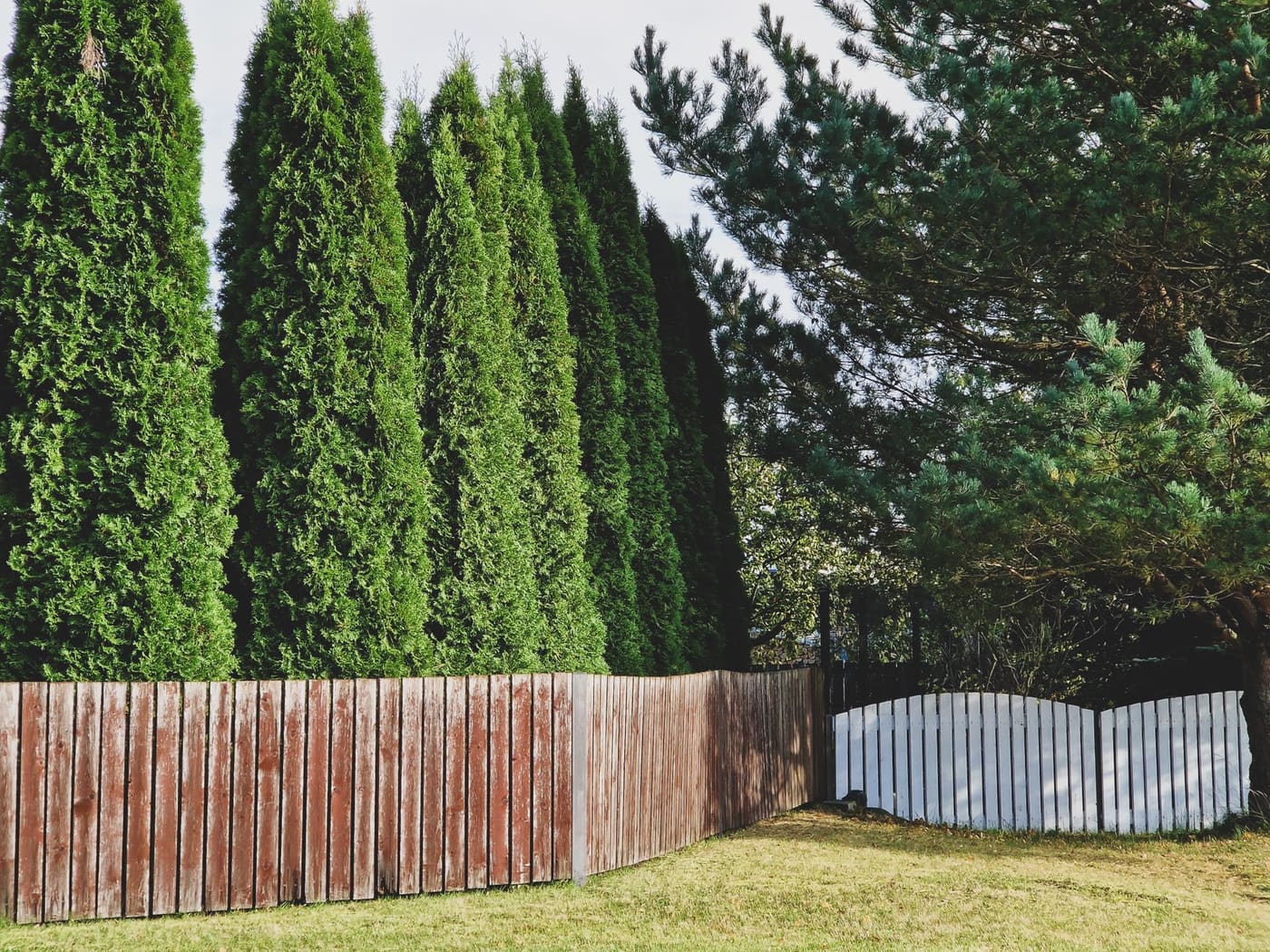
For privacy along a fence with little upkeep, plant evergreen shrubs or small evergreen trees that naturally grow to the height you need, such as arborvitae, holly, or certain junipers and viburnums (holly berries and several other shrubs are toxic to pets and children if eaten, so check each plant if animals use the yard), spaced by their mature width. Add ornamental grasses or climbing vines on the fence itself where space is tight. The best choice depends on your climate, sun, and how tall and wide you can allow the planting to grow.
Fast screening and low maintenance often pull in opposite directions. The quickest-growing plants tend to outgrow their spot or need frequent shearing, while the tidiest ones may take three to five years to fill in. The sections below compare the main options, give spacing and cost guidance, and explain how to avoid the common regrets.
Decide how tall, how fast, and how much room
Before choosing species, answer four questions:
- How high do you need the screen? Measure the sight line you want to block, such as a neighbor’s window. Often 6 to 8 feet is enough, and in some places fences and hedges are subject to height limits.
- How wide can the planting be? Many popular screening plants grow 6 to 15 feet wide or more. A planting strip only 3 feet wide needs narrow, columnar plants.
- How much sun does the strip get? Check hours of direct sun, since screening plants differ widely in tolerance.
- How much pruning will you tolerate? Plants that keep their natural shape need far less work than formal hedges.
Also check the property line and any local rules. Plant far enough from the line that mature branches stay on your side, commonly at least half of the mature width. Call 811 a few days before digging, since the required notice is set by state law, and avoid planting large shrubs under power lines or over buried utilities. Plant choice also depends on your hardiness zone and local climate, so check each plant’s zone rating, and ask a local nursery or extension office which screening plants do well in your area.
Evergreen screens that need little shaping
Evergreens give year-round cover. These types are widely used, though suitability depends on your region:
| Plant type | Typical mature size | Light | Notes |
|---|---|---|---|
| Arborvitae (upright types) | Often 10 to 20 feet tall, 3 to 8 feet wide | Full sun to part shade | Dense, narrow, low pruning; can be browsed heavily by deer |
| Holly (upright or tall types) | Often 8 to 20 feet tall | Sun to part shade | Prickly leaves, good for security, some berry-producing forms need male and female plants |
| Juniper (upright types) | Varies, often 10 to 20 feet tall | Full sun | Tough and drought tolerant, can be prone to some diseases in humid areas |
| Viburnum (evergreen types) | Often 8 to 15 feet | Sun to part shade | Fuller look, check hardiness for your zone |
| Cherry laurel and similar | Often 10 to 20 feet | Sun to shade | Fast, but can become large and needs pruning; check suitability for your region |
Narrow, columnar forms are ideal for small yards. For example, upright arborvitae typically spaced 3 to 5 feet apart forms a continuous screen in several years. Check the tag for the specific variety, since sizes vary widely, and keep them clear of the fence so air moves and you can reach the back.
Avoid planting a single species in a long continuous row if a pest or disease could wipe it out. Mixing two or three kinds of evergreens reduces the risk and looks more natural.
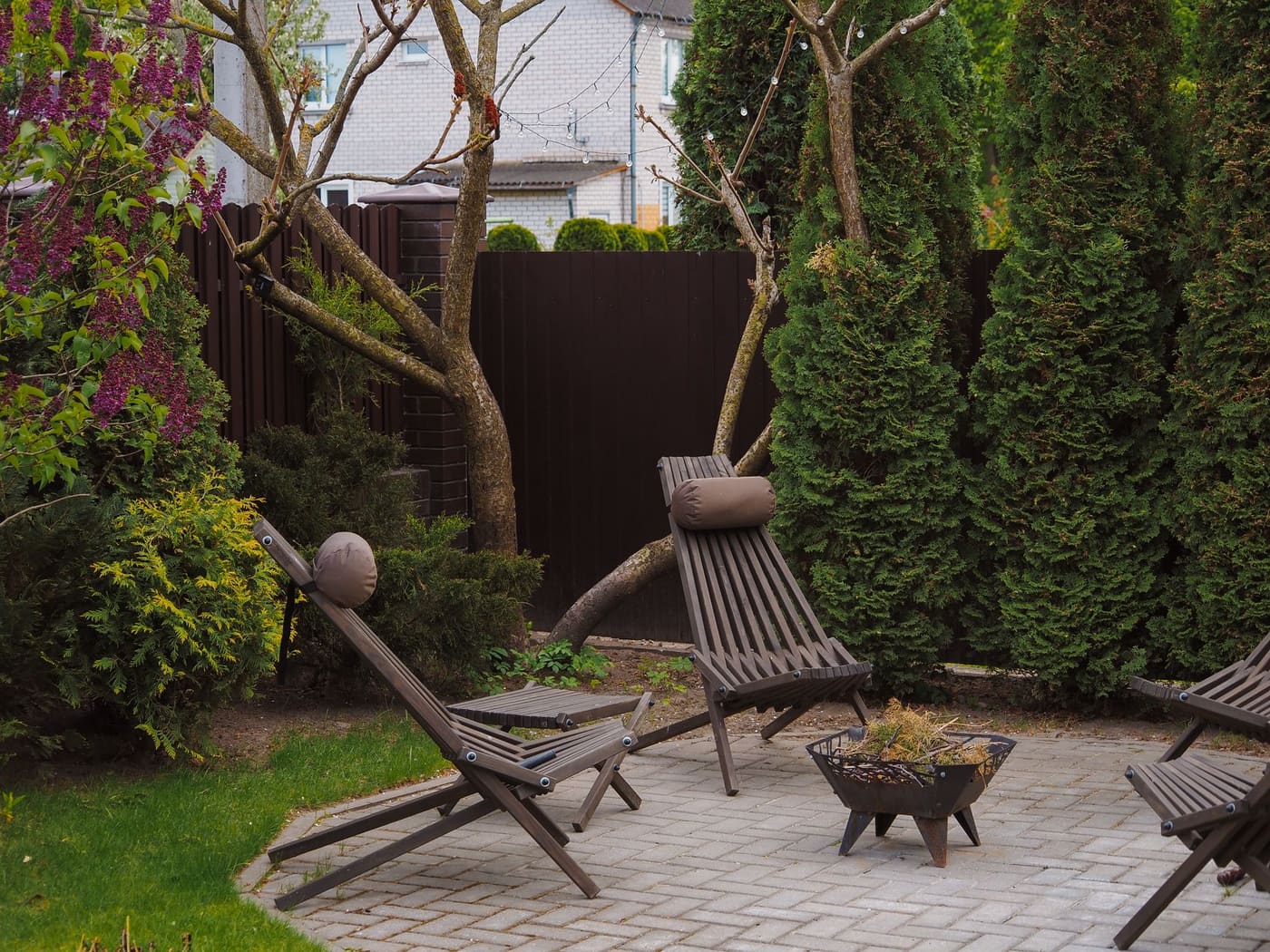
Deciduous and semi-evergreen options
Plants that drop their leaves still screen well in summer and can be tidier and cheaper. Many also offer flowers, fall color, or berries for wildlife. Common choices include:
- Lilac and mock orange for fragrance and spring flowers, with winter views left open.
- Viburnum types for flowers and berries.
- Switchgrass and other tall ornamental grasses, which grow quickly to 4 to 8 feet in a season and are cut back once in late winter. They give summer privacy but leave the fence visible in winter.
- Bamboo, though caution is required. Running bamboo spreads aggressively by underground rhizomes and can invade neighboring yards. Clumping types are better behaved, but check how hardy and how large they get in your area. A root barrier installed correctly is essential if you plant running types.
Plan for winter if you need year-round cover. A mix of evergreens and deciduous shrubs gives privacy in all seasons and more variety than a single line of one plant.
Climbing plants on the fence
If the strip along the fence is narrow, climbers use vertical space. Attach a trellis or wire system to the fence, keeping it a couple of inches off the surface for airflow. Options include:
- Clematis, which offers flowers and many are hardy in a wide range of zones. Prune by group as the variety specifies.
- Climbing hydrangea, slow to start but long-lived, with heavy clinging stems.
- Honeysuckle (native types), vigorous and good for pollinators. Avoid invasive species in regions where they spread.
- Annual vines like morning glory and sweet pea, which fill in within one season and need replanting each year.
- Trumpet vine and some ivies, very vigorous. They can damage wood fences or siding and spread widely, so they are best used with care.
Wood fences can rot where vines hold moisture against them, so leave space and let air move. If the fence is old or weak, repair or replace it first, because heavy vines add weight and wind load. For narrow spaces and clever use of height, see making a small yard feel more usable.
Spacing, soil, and planting for success
Poor planting is the biggest reason screens fail. Follow these steps:
- Space plants at roughly 60 to 100 percent of their mature width for a screen, closer for a faster result and wider for a more natural look with better airflow.
- Dig holes two to three times the width of the root ball and the same depth as the root ball, with the top of the root ball level with or slightly above the soil.
- Loosen circling roots, backfill with native soil, and water deeply.
- Mulch 2 to 3 inches deep, a few inches clear of stems.
- Water new shrubs deeply once or twice a week in dry weather for the first one to two growing seasons. Drip irrigation or a soaker hose along the row makes this simple.
Check soil drainage before planting. Many screening evergreens suffer in constantly wet soil. For a method to test drainage and match plants to conditions, read how to choose plants that actually fit your yard.
Costs and timing
Prices vary widely by region, size, and species, so price your list at a local nursery. Larger plants cost much more each, and delivery and professional planting add to the total. A 30-foot screen of upright evergreens spaced about 4 feet apart needs roughly 7 or 8 plants, which gives you a count to multiply by local prices. Buying smaller plants costs less and often establishes faster than large ones, though it takes longer to look full.
Plant in early spring or fall in most climates, so roots establish before extreme heat or frost. Avoid midsummer planting unless you can water regularly.
Keep the upkeep low
A few habits keep a screen easy:
- Let plants keep their natural shape. Choose species sized for the space to avoid constant trimming.
- Prune at the right time. Most flowering shrubs are pruned right after they bloom, and evergreens are lightly shaped in late spring or early summer. Do not cut into bare wood on many conifers, as they often do not regrow from it.
- Mulch and water in the early years. This is the main task, and it prevents later problems.
- Check for pests and disease. Brown patches, webbing, or dieback deserve a look, and a local extension office can help identify issues.
- Keep plants off the fence. Leave a gap so you can maintain the fence and prevent rot.
Tall hedges and tree work above a safe reach should be done by a licensed arborist rather than from a ladder, particularly near power lines. For more ways to cut recurring chores, see keeping a yard looking good with less maintenance.
Where this comes from
This guide is based on university cooperative extension planting guidance (hole size, mulch depth and placement, and checking mature size and zone), the USDA Plant Hardiness Zone Map for cold-tolerance ratings, and the national 811 call-before-you-dig program. Plant sizes and spacings are typical ranges; the plant tag for your variety is the better source. Prices, plant availability and local height rules change by region, so check them with a local nursery, your extension office and your city or county.